

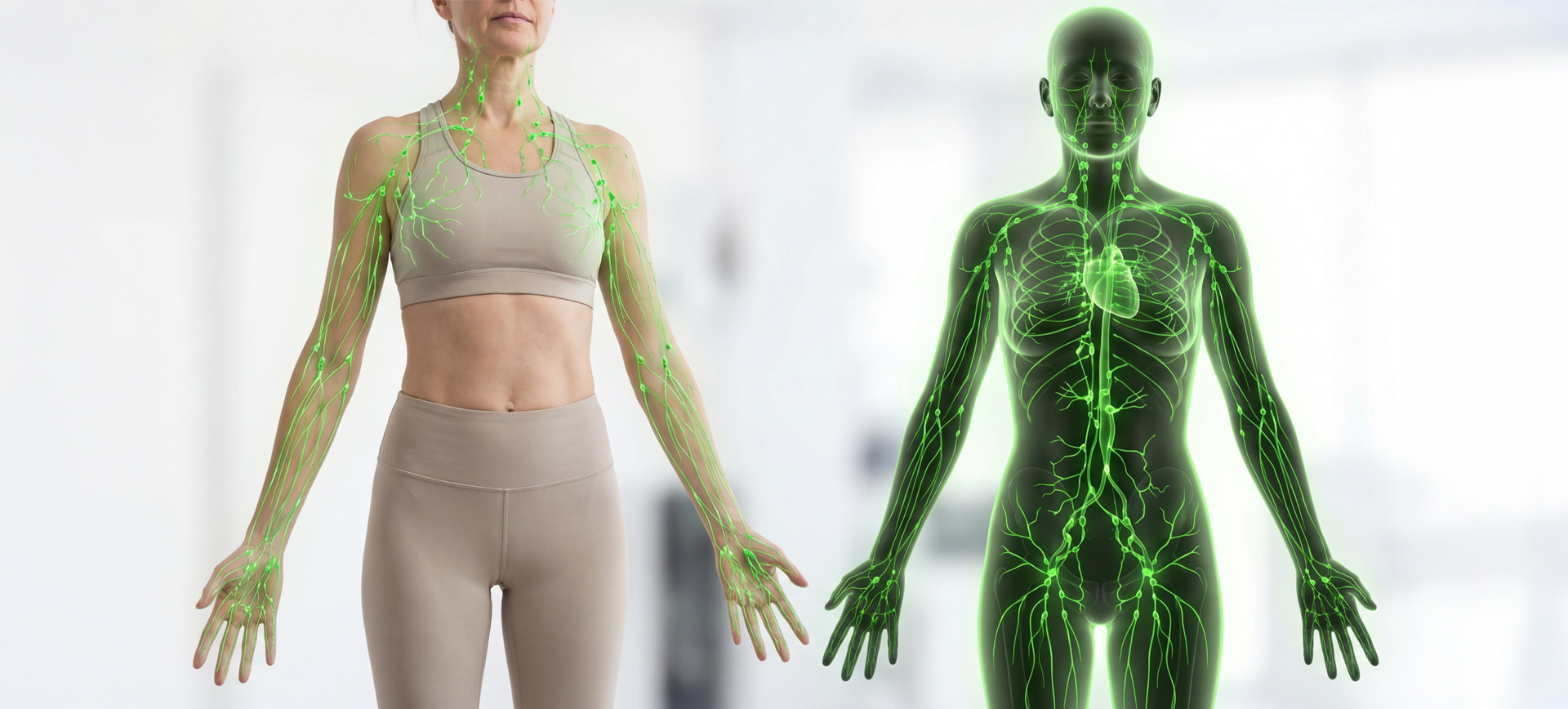
Improve Lymphedema, Swelling & Tissue Health
Activate
- Stimulate circulation to support healthy blood and lymphatic flow.
- Support the body’s natural repair process by improving local circulation.
- Promote cellular activity to create a healthier environment for tissue recovery.
Calm
- Reduce inflammation and tissue irritation.
- Ease pain, pressure, and discomfort associated with swelling.
- Calm sensitive or irritated tissues to support more comfortable movement.
Restore
- Restore tissue mobility and elasticity.
- Support healthier tissue remodeling and recovery.
- Improve movement and function as swelling and tissue restrictions decrease.

Primary Causes & Contributing Factors
Impaired Lymphatic Drainage
The lymphatic system clears excess fluid, proteins, and waste from tissues. When it is disrupted—by surgery, radiation, or injury—fluid begins to accumulate, leading to persistent swelling and a feeling of heaviness.
Post-Surgical & Post-Traumatic Swelling
After surgery or injury, swelling is a normal part of healing. However, when it lingers, it can slow tissue repair, limit movement, and create an environment where recovery stalls.
Reduced Circulation & Tissue Health
Swollen tissues often have poor circulation, limiting oxygen and nutrient delivery. This slows recovery and increases the risk of long-term tissue changes.
Chronic Inflammation
Persistent swelling keeps tissues in a prolonged inflammatory state. This delays healing and can lead to fibrosis (tissue thickening), discomfort, and reduced function over time.
Protein-Rich Fluid Accumulation (Lymphedema)
Lymphedema involves protein-rich fluid that attracts additional fluid into the area. When swelling caused by a compromised lymphatic system, injury, or surgery is not properly managed, it can progress from mild swelling to more chronic, harder-to-treat stages.
The Types of Swelling Most Likely to Benefit
Frequently Asked Questions
How do you give the Softwave treatments?
We’ll guide you through the Softwave treatment step-by-step, ensuring we have your complete agreement before proceeding. To keep you comfortable, we’ll offer disposable draping.
For the treatment, we use ultrasound gel on the applicator and the areas we’re focusing on.
The Softwave applicator can reach depths of up to 6 inches (though this depth isn’t necessary) and will be gently applied to areas like the breast, lower abdomen, genital region, or pubic area, depending on your treatment requirements. Softwave is entirely noninvasive, free from drugs or invasive techniques. You might notice clicking sounds and feel gentle pulses stimulating your tissues, promoting your body’s natural healing process.
We will provide post-treatment instructions for you to follow.
The average session lasts about 20 to 25 minutes.
What should I do to prepare for my first appointment?
SoftWave treatment uses ultrasound gel to help deliver the energy to the targeted tissues. Depending on your needs, the applicator may be gently applied to areas such as the arm, leg, pelvic, genital, or pubic region. You may hear clicking sounds and feel gentle pulses during treatment.
Your therapist will guide you through each step and obtain your consent before treatment. Disposable draping will be provided to protect your comfort and privacy.
SoftWave is noninvasive and does not involve medications or injections. A typical session lasts 20–25 minutes, followed by personalized post-treatment instructions.
Please wear loose, comfortable clothing that allows easy access to the treatment area. If needed.