

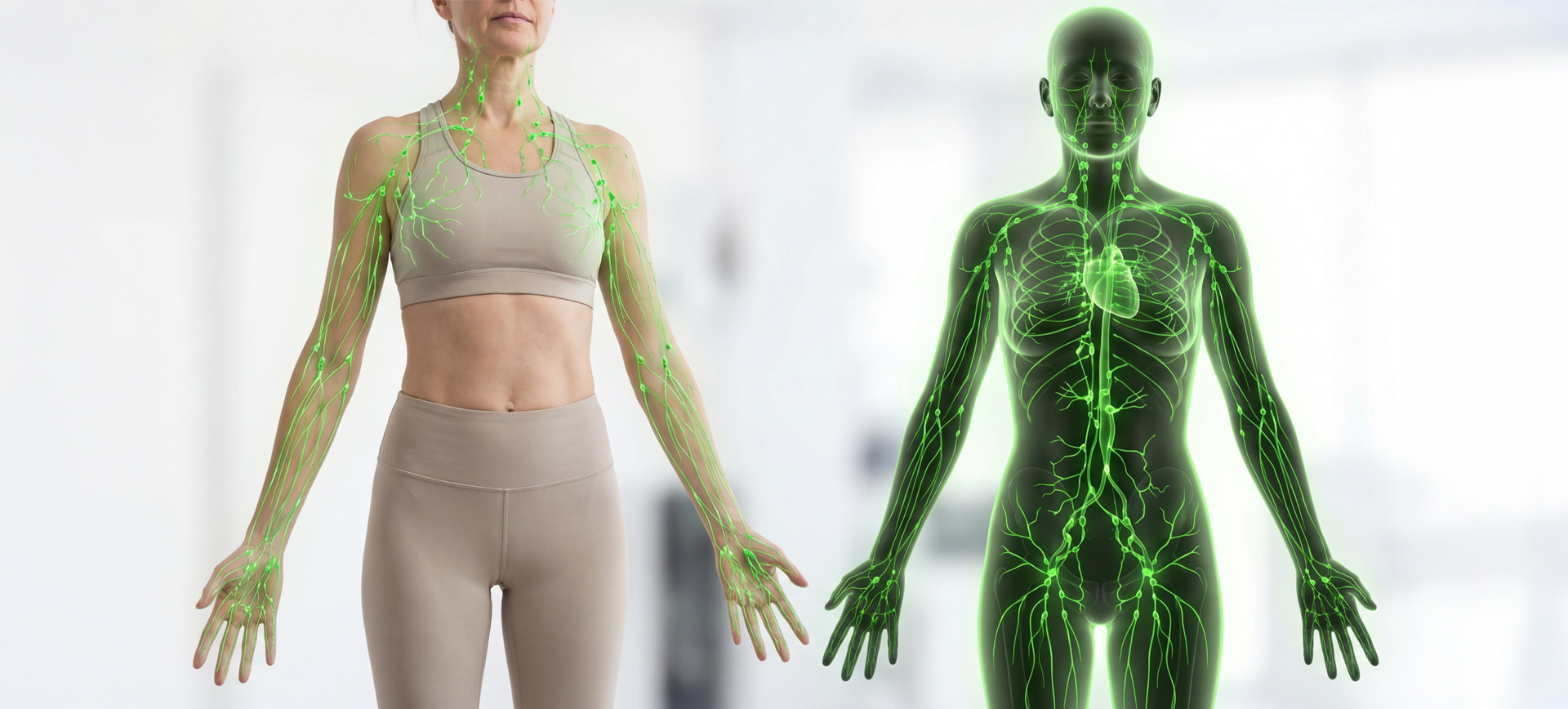
Reducing Swelling, Lymphedema
& Supporting Recovery
Primary Causes & Contributing Factors
Impaired Lymphatic Drainage
The lymphatic system clears excess fluid, proteins, and waste from tissues. When it is disrupted—by surgery, radiation, or injury—fluid begins to accumulate, leading to persistent swelling and a feeling of heaviness.
Post-Surgical & Post-Traumatic Swelling
After surgery or injury, swelling is a normal part of healing. However, when it lingers, it can slow tissue repair, limit movement, and create an environment where recovery stalls.
Reduced Circulation & Tissue Health
Swollen tissues often have poor circulation, limiting oxygen and nutrient delivery. This slows recovery and increases the risk of long-term tissue changes.
Chronic Inflammation
Persistent swelling keeps tissues in a prolonged inflammatory state. This delays healing and can lead to fibrosis (tissue thickening), discomfort, and reduced function over time.
Protein-Rich Fluid Accumulation (Lymphedema)
Lymphedema involves protein-rich fluid that attracts additional fluid into the area. When swelling caused by a compromised lymphatic system, injury, or surgery is not properly managed, it can progress from mild swelling to more chronic, harder-to-treat stages.
The Types of Swelling Most Likely to Benefit
- Swelling caused by trauma or injury
- Persistent swelling lasting more than 8 weeks after surgery
- Mild to moderate lymphedema
These conditions often involve stagnation, impaired circulation, and chronic low-grade inflammation—key areas where improving tissue environment can support recovery.
How This Connects to Our Approach
At FIG Wellness Therapy, we focus on restoring the environment where healing can occur:
- Supporting lymphatic and fluid movement
- Improving circulation and tissue health
- Reducing chronic inflammatory signaling
- Addressing the system early to prevent progression
SoftWave is used as a tool to stimulate the body’s natural repair response, helping shift tissues out of stagnation and toward recovery.
Care is provided by a Certified Lymphedema Therapist (CLT-LANA) with experience in oncology and complex swelling conditions—ensuring a thoughtful, medically-informed approach to each case.
Important Note for Lymphedema Patients
SoftWave therapy is used as an adjunct to comprehensive lymphedema care, either during or after treatment. It may help reduce swelling and soften fibrotic tissue, supporting overall tissue health.
However, SoftWave is not a cure and does not replace standard lymphedema management.
If you have not yet received formal treatment, it is important to be evaluated at a specialized lymphedema clinic for comprehensive care, including manual lymphatic drainage, compression, exercise, and long-term management.